|
View this message on our website.
| |
|
|
|
|
|
FROM PUP TO PARTNER: THE RIGOROUS ROAD TO SERVICE FOR K-9s
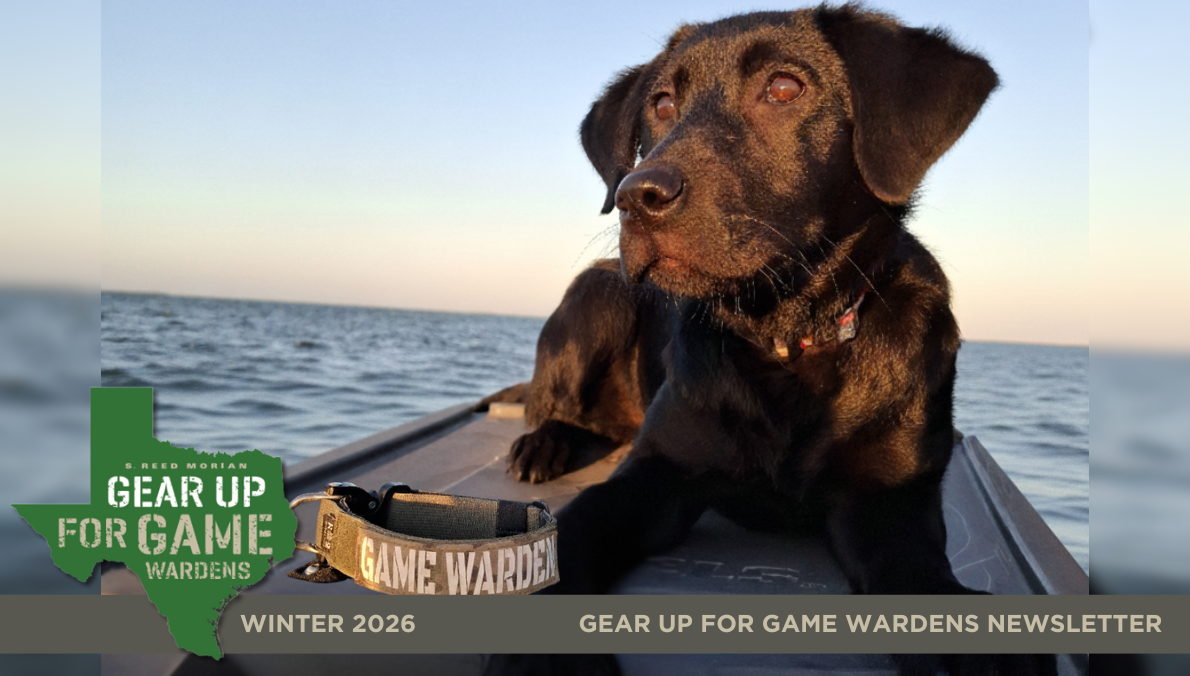
Before a Texas Game Warden K-9 ever answers its first call, months of rigorous training are already behind it. That preparation is underway now with Indy, a young black Labrador retriever recently recruited for the Texas Game Warden K-9 Team.
Indy’s path to service began well before she ever arrived in Texas from her home state of Connecticut. With an impressive pedigree as the pick of the litter from of a long line of accomplished field trial dogs, she was chosen for her natural drive, athleticism, and confidence — essential traits for dogs expected to work in unpredictable environments.
“What matters most is how a dog responds to new settings,” said Texas Game Warden Royce Ilse, a longtime K-9 handler who oversees K-9 procurement and early training. “A dog can want to work, but if they’re uneasy around noise, crowds, or uneven ground, it limits what they can do in the field."
Within days of her arrival, Indy was introduced to a flurry of unfamiliar sights and sounds, including elevators, busy spaces, and the unfamiliar territory of daily patrol environments. These early experiences help determine whether a dog can later perform in unpredictable settings like debris fields, disaster zones, and rugged, remote terrain.
Indy’s training will progress through a series of structured stages, beginning with foundational obedience, and she will then move into essential skills such as scent tracking, article searches, and basic search-and-rescue behaviors. These skills are practiced in controlled settings before being reinforced in more challenging scenarios.
Once paired with a handler, a K-9 unit typically completes eight weeks of full-time instruction, followed by ongoing work toward certification. Even after deployment, handlers log regular training hours to ensure their K-9 partners maintain peak ability across disciplines.
Training is adapted based on real-world experience. Following last summer’s Hill Country floods, Texas Game Wardens incorporated lessons learned from that disaster response into K-9 training scenarios to better mirror the complex reality of difficult, diminished conditions such as navigating around water barriers and through large debris fields.
Support from the Texas Parks and Wildlife Foundation’s (TPWF) S. Reed Morian Gear Up for Game Wardens program has been central to establishing, expanding, and sustaining the K-9 Team. Funding through Gear Up helps with everything from acquiring dogs like Indy to providing specialized gear or covering travel and training costs.
“The K-9 program wouldn’t be where it is today without Gear Up,” Ilse said. “It’s what allows us to train these dogs the way we need to so they can serve Texans effectively."
For now, Indy’s world is full of new experiences and repeated practice. But every exercise builds toward future moments when she may be called to locate someone who is lost or help responders bring answers to a worried family. Thanks to the careful preparation now underway, she’ll be ready to hit the ground running.
To learn more about how last year’s flood response has shaped and strengthened ongoing K-9 training, check out this recent report from KSAT TV in San Antonio.
SUPPORT THE K-9 FUND
|
| |
 |
|
|
|
|
|
GEAR UP - BY THE NUMBERS
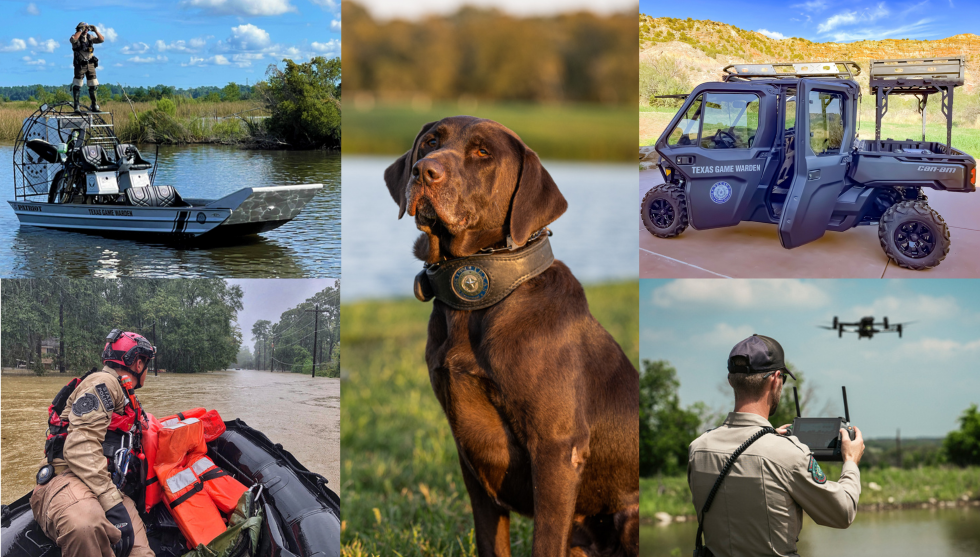
Since Gear Up’s inception eight short years ago, the program has delivered more than $8 million in specialty equipment across the state, including search and rescue (SAR) drones, SAR inflatable boats, side-scan sonar units, water rescue dry suits, night vision and thermal imaging units, ATVs, UTVs, and fully outfitted K-9 units. Here are just a few numbers behind the gear:
- 2,818 individual donations since 2017
- 1,376 Gear Up purchases made by TPWF since 2017, including:
- 376 night vision and thermal monocular units
- 65 SAR drones
- 39 ATV/UTVs
- 26 specialty boats and SAR inflatable rafts
- 12 K-9 officers
In 2025 alone, Gear Up received more than 718 donations amounting to $2 million. Generous grassroots giving enabled us to make over 200 equipment purchases, including 550 pairs of SITKA mud boots, 30 thermal imaging units, 15 night vision units, 10 Starlink devices/service, 11 SAR drones, 3 UTVs, 5 boats, 1 boat lift, and 1 new K-9 recruit.
And, thanks to your continued support, our equipment tally continues to tick up with each passing week. We couldn’t do it without you. Thank you for helping us deliver the high priority gear our Texas Game Wardens need to safely perform their jobs of protecting the wild things, wild places, and people of Texas.
|
| |
|
|
|
|
|
|
EXTRA EYES IN THE SKY PROVE PIVOTAL FOR TEXAS GAME WARDENS
For Texas Game Wardens, drones are no longer a novelty. They are a critical tool and effective force multiplier, quietly working overhead to carry out essential missions like locating missing loved ones, guiding responders through disaster response and other emergency operations, and bringing clarity to a host of fast-moving situations. That capability was on full display during a desperate late-night search and rescue mission in Stephens County in early December 2025.
Just after 10 p.m. on December 6, Texas Parks and Wildlife Department’s (TPWD) Unmanned Aircraft Systems (UAS) team was requested to assist the Stephens County Sheriff’s Office in the search for a 66-year-old man with cognitive decline. The man had last been seen on a doorbell camera leaving his home several hours earlier.
Texas Game Warden and UAS pilot Michael Hummert arrived on scene around 11:30 p.m., joining local deputies, Texas DPS, and fellow game wardens already engaged in the search. Working alongside Texas Forest Service drone operators, the team began scanning brushy terrain and rocky shoreline in darkness that would have been difficult and time-consuming to search on foot.
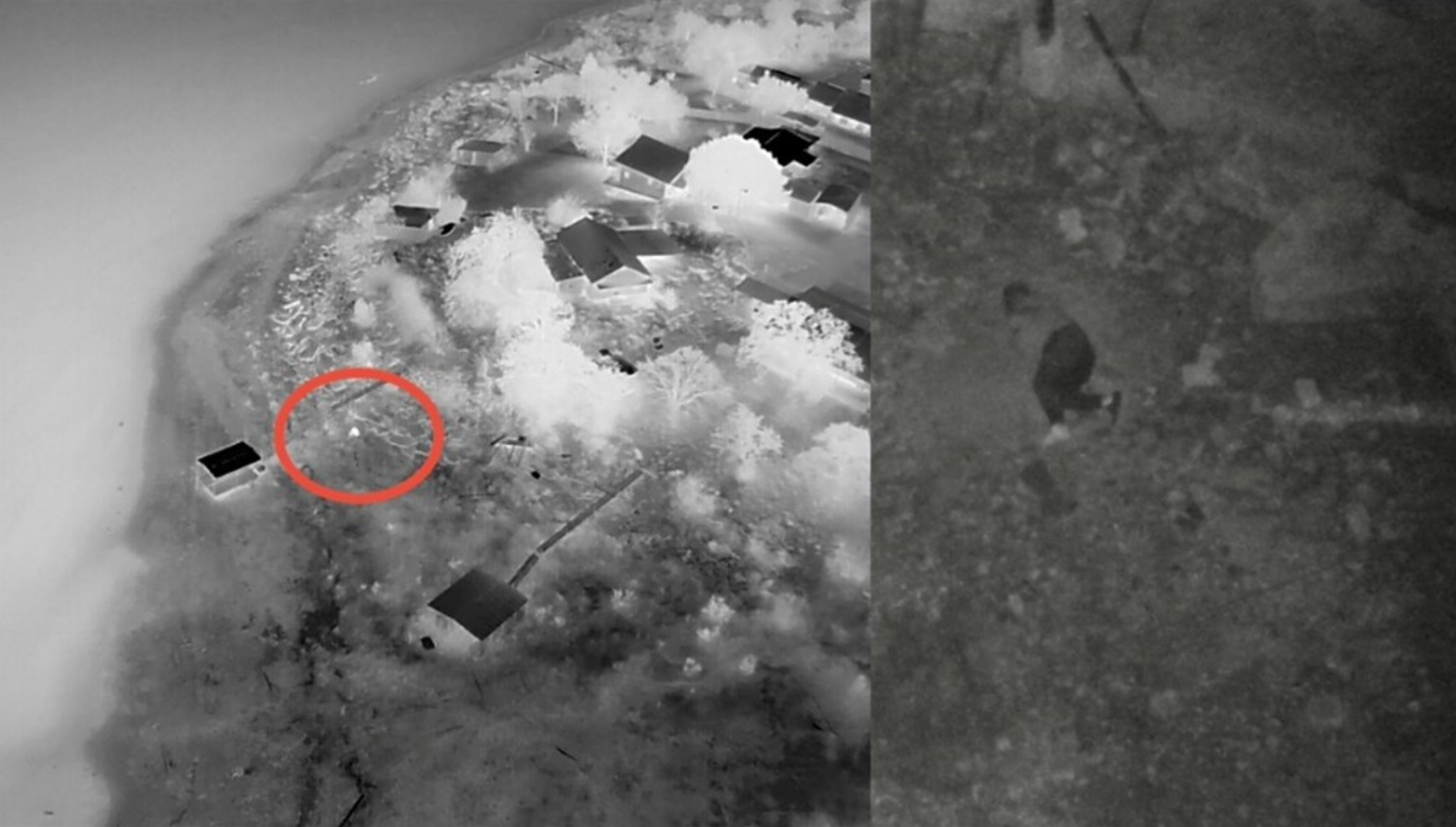
Seven minutes into the flight, Hummert’s thermal drone picked up a heat signature near a boathouse along the shoreline. “Once we saw that heat signature, everything changed,” Hummert said. “We were able to direct responders straight to him.” First responders reached the man quickly, who was lying on the ground roughly 450 yards from his home. Despite several cuts and bruises, he was otherwise unharmed. He was treated on scene and quickly reunited with his relieved family.
For Hummert, the mission was just one of countless examples of how drones have become an integral, everyday part of modern game warden work. It also illustrates that the impact of drones is not only measured in miles covered, but in seconds saved. “It’s like having an extra set of eyes in the sky,” he said. “We can cover ground faster, see things we’d never see from the ground, and do it without putting responders at unnecessary risk."
Over the past year alone, drones have been used for search and rescue operations, flood response, wildfire support, illegal dumping investigations, and crucial overwatch for other law enforcement agencies. That capability has been made possible almost entirely through private support. The vast majority of the growing Texas Game Warden drone fleet, along with the thermal sensors and other specialized equipment and technological features they employ, have been funded through the TPWF’s S. Reed Morian Gear Up for Game Wardens program. To date, the program has delivered more than 65 customized drones to the UAS team.
“Without Gear Up, we wouldn’t have a drone program,” Hummert said. “This equipment saves time, saves resources, and in cases like this, saves lives."
With your support, we can continue to do great things for our Texas Game Wardens who dedicate their lives to protecting the lands, waters, wildlife, and people of Texas. You can help ensure our Texas Game Wardens have access to life-saving equipment by donating to Gear Up today.
|
|
|
|
|
|
|
CCA CONTINUES ITS SUPPORT OF COASTAL INTERNS
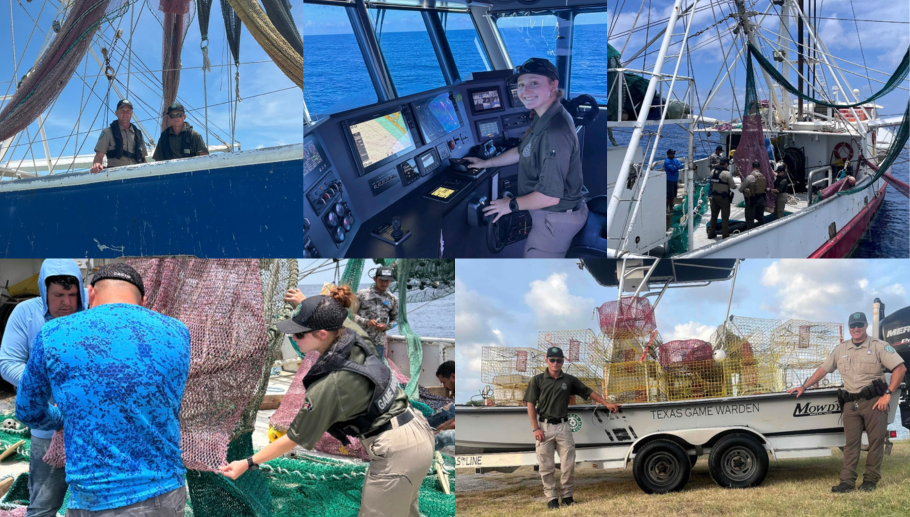
Thanks to TPWF’s longstanding partnership with the Coastal Conservation Association (CCA), four new interns gained invaluable skills and training this summer by working alongside seasoned Texas Game Warden mentors as part of TPWD’s internship program. The program provides qualifying college students with paid professional experience in natural resource conservation. To date, CCA has funded a total of 48 conservation law enforcement internships serving Texas’ coastal counties since 2013.
“One of the most formative parts of my internship was patrolling offshore waters—an experience that truly brought classroom concepts to life,” shared intern McKenzie Ahrlett. “I had the opportunity to assist game wardens as we boarded and inspected shrimp boats in the Gulf. It was eye-opening to see how much coordination, patience, and precision these operations require."
"Another highlight was working during the opening weekend of red snapper season. From sunrise to sunset, we were out on the water conducting vessel stops, checking licenses, and counting snapper to ensure everyone was within the legal limit,” Ahrlett recalled. “The amount of public enthusiasm surrounding this season underscored how vital conservation work is to maintain a thriving coastal fishery for future generations."
For intern Carlos Ojeda, the experience served as a pivotal turning point in his professional journey. “This opportunity has been nothing short of life-changing,” said Ojeda.
"I'm especially grateful that organizations like CCA recognize the importance of investing in the next generation of conservation professionals. CCA’s belief in the mission of resource protection and education is inspiring, and I am proud to be a direct beneficiary of their commitment."
As a testament to the program’s effectiveness, many former interns have gone on to become Texas Game Wardens. According to Program Coordinator Lieutenant Rachel Kellner, on average, six to eight cadets in every graduating class of the Texas Game Warden Academy are former interns. A former intern herself, Lt. Kellner sees this program as TPWD’s single best recruitment tool in the Law Enforcement Division as it continues to cultivate Texas’ best and brightest recruits.
|
| |
|
|
|
|
|
|
BECOME A FRIEND OF TEXAS GAME WARDENS
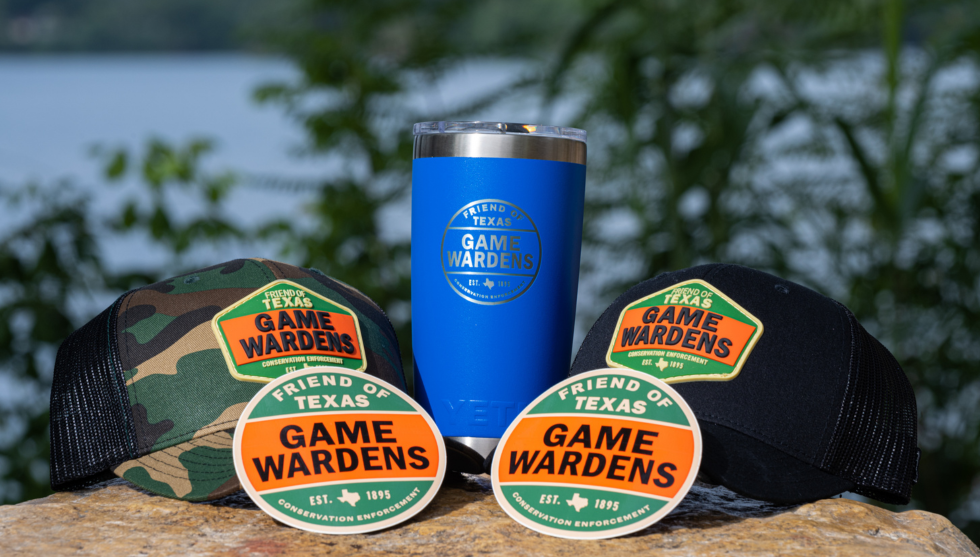
Supporting the S. Reed Morian Gear Up for Game Wardens program ensures TPWF can manage the program and continue purchasing the specialty equipment Texas Game Wardens need to safely perform their jobs and return home to their families after each and every patrol.
When you become a "Friend of Texas Game Wardens," you become an integral partner in Gear Up’s urgent mission by providing the critical operational support necessary to keep the program going. Become a Friend today and see the exclusive items you will receive so you can show your support of Texas Game Wardens.
Help us continue our commitment to support the best-trained corps of conservation officers in the nation—become a "Friend of Texas Game Wardens" today!
BECOME A FRIEND
|
|
|
| |
|
|
|
|
|
|
 |